
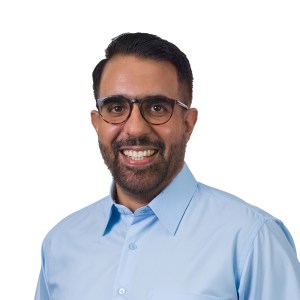
Mr Pritam Singh asked the Minister for Transport (a) in view of the position taken for commercial vehicles’ growth and the significantly smaller road footprint of motorcycles in general, whether the Ministry has conducted any studies allowing for a marginal growth in the number of motorcycles on Singapore’s road space management; and (b) if not, why not.
Mr Chee Hong Tat: Thank you. Sir, the Ministry of Transport (MOT) understands the concerns of Singaporeans regarding high Certificate of Entitlement (COE) prices. My residents and stallholders have also shared their feedback with me during my market and house visits. I thank Members for their questions on this topic.
My response will have three parts. First, I will recap why our zero-vehicle growth policy remains relevant, as the COE system is one of the policy measures, which supports this goal. Second, I will clarify some of the questions that Members in this House and the public have raised regarding how the COE system operates. And finally, I will explain the steps we have taken to address the concerns.
Let me start with our zero-vehicle growth policy, which is important for managing traffic congestion in land-scarce Singapore. We currently have about one million vehicles on our roads, including more than 650,000 cars. It is not tenable for our vehicle population to keep increasing, as it means that we have to either set aside more land to build more roads, or accept higher levels of congestion like what we see in many overseas cities.
The Government’s aim is to build an accessible, inclusive and sustainable land transport system that meets the needs of all Singaporeans, while bearing in mind our two key constraints: land and carbon emissions. Roads currently take up about 12% of our total land and the land transport system accounts for about 15% of Singapore’s total domestic carbon emissions.
Reflecting the views of many Singaporeans, we have adopted a “car-lite” strategy and placed mass public transport at the core of our transport strategy. Currently, 64% of peak-period journeys are made on public transport and we aim to increase this to 75% by 2030 as we expand our Mass Rapid Transit (MRT) network. Conversely, the percentage of car-owning resident households has fallen from 40% in 2013 to about one-third in recent years.
Mass public transport enables the greatest number of people to get to their destinations with the least land take and carbon emissions. With our current energy mix where the bulk of our electricity is generated using natural gas, a journey that is made on an electric vehicle emits 50% of the carbon compared to an internal combustion engine vehicle. However, if the journey is made using an electric bus, the carbon emission level drops to 30%. Using MRT is even better, as the carbon emission level is only 10% compared to an internal combustion engine vehicle.
To keep our buses and trains running, the Government subsidises public transport by more than $2 billion annually; and this translates to more than $1 in subsidies per journey. We are also expanding our public transport network significantly – an additional 100 kilometres of rail by 2035, which is almost 40% increase from our current network. Today, seven in 10 households are within a 10-minute walk of one of our 202 MRT and Light Rapid Transit (LRT) stations. By the next decade, it will be eight in 10 households. To achieve these improvements, the Government is investing more than $60 billion in the rail network this decade.
Besides mass public transport, we are also enhancing the first-and-last-mile options such as walking and cycling, as well as access to point-to-point (P2P) services offered by taxis, private hire vehicles and car-sharing vehicles. These provide options for Singaporeans who do not own cars, but may need to use cars as a service from time to time, for example to take family outings during weekends or to send their parents for medical appointments.
As Members are aware, the COE system is an allocation mechanism for our vehicle quota, to achieve the zero-vehicle growth policy. COE bidding takes place twice a month and the bid prices can fluctuate depending on the prevailing demand and supply. When demand is weaker and there is plentiful supply, prices will be lower. However, when supply is tight, like what we are experiencing for the past year, and demand is strong, prices will increase.
Over the last three quarters, or from February 2023 to October 2023, the largest driver of demand has been from Singapore residents. Three in four Category A (Cat A) COEs and two in three Cat B COEs were won by Singapore residents. In comparison, foreigners won 1% of Cat A COEs and 4% of Cat B COEs. It is clear that the increase in COE prices was not due to foreign buyers.
Some have asked if the high COE prices were caused by households who own multiple cars and whether we should impose additional taxes on such households when they purchase their second or subsequent vehicle. The percentage of multiple car-owning households has been reducing – from about 19% of car-owning households in 2012 to less than 15% today. This translates to just 5% of all households in Singapore, since about one-third of households own cars. Given the low proportion, demand-measures such as imposing additional taxes on foreigners or households that own multiple cars would have little effect on COE prices.
Let me now turn to car-leasing companies, which bid for vehicles that are then leased out as private hire cars (PHCs). These companies won about 21% of Cat A COEs in the last three quarters. This is lower than the 27% of Cat A COEs they won in 2022. In fact, in the most recent bidding exercise, car-leasing companies won only 16% of the Cat A quota. Their proportion of Cat B winning bids also reduced slightly from 24% in 2022 to 23% in the last three quarters. The data shows that COE prices have gone up in a period where demand from car-leasing companies has come down, so it is unlikely that they are the main factor for the increase in COE prices.
There are two categories of PHCs: self-drive PHCs and chauffeured PHCs. Both are available for rentals, but only chauffeured PHCs may be used to provide ride-hail services. As of September 2023, the total PHC population is around 78,000 – similar to what it was in end-2019. About two-thirds are chauffeured PHCs and the remaining are self-drive PHCs including car-sharing vehicles.
As of September 2023, about 53,000 individuals hold a PHC Driver’s Vocational Licence (PDVL), allowing them to provide ride-hail services using a chauffeured PHC. Two-thirds of PDVL holders who made at least one ride-hail trip in September 2023 drive company-owned cars, while the rest drive cars owned by individuals, including their own vehicles.
Sir, as I explained earlier, PHCs and taxis complement mass public transport by providing Singaporeans with an alternative option for point-to-point journeys. The demand for P2P services is increasingly met by PHCs rather than taxis. Pre-COVID, PHCs provided around three out of every five P2P trips. This has increased to about two out of every three P2P trips as of September 2023.
PHCs therefore play an important role in ensuring the availability of P2P services for commuters. They also serve more individuals and households compared to private cars. In addition, PHCs allow our drivers to earn a living using their own cars or leasing from PHC companies. The Land Transport Authority (LTA) has started a review on the industry structure and regulatory framework for P2P providers to ensure that services stay relevant and are able to meet evolving commuter needs.
Mr Gan Thiam Poh and Mr Yip Hon Weng suggested having a separate COE category for car-leasing companies or treat them like taxis which do not have to bid for COEs.
There are trade-offs to having a separate COE category for car-leasing companies. Similar to taxis, the quota for this new category would have to be drawn from existing categories given our zero-growth policy. As PHC demand is still evolving and could vary from quarter to quarter, it is difficult to ascertain what is the exact quota required to meet the needs of drivers and commuters. If we move too much of the existing quota from Cat A and B to this new category for PHC companies, it will further reduce the supply in these categories and there is a risk that COE prices may spike further. On the other hand, if we do not move enough quota to the new category, drivers will end up with insufficient vehicles to rent and commuters could be affected by shortages in P2P services.
We will study if there are further options beyond COE bidding to address the concerns with car-leasing companies, recognising that PHCs do travel longer distances on our roads but they also serve an important function in providing P2P services for Singaporeans.
Next, let me turn to concerns over speculative demand, including by dealers, as raised by Mr Saktiandi Supaat. We have a suite of measures in place to discourage speculation. For Cat A and B, there are a number of restrictions. The Temporary COE (TCOE) bid must be made in the name of the buyer and transfers are not allowed. The TCOE is valid for six months, within which it must be used to register a vehicle, otherwise it expires and the bid deposit of $10,000 is forfeited. For Cat E, the validity period of the TCOE is shorter, at three months.
Specifically for Cat E, we have seen that the TCOEs are used to register vehicles, on average, within 14 days, way before the validity period of three months. Since January 2023, only one Cat E TCOE has expired. [Please refer to “Clarification by Senior Minister of State for Transport“, Official Report, 06 November 2023, Vol 95, Issue 115, Correction By Written Statement section.]
This shows that the dealers are not speculating, but are bidding based on actual demand.
The large majority of bids for cars are clustered within a small range around the clearing price, with most bids being made within the final hour of bidding. This shows that bidders are closely monitoring the clearing price and making bids based on their willingness to pay, while not paying more than necessary. It is typically not in the interests of dealers to bid higher than what is necessary to win the bid, as they have to absorb the higher COE prices since they have committed to certain sale prices for their vehicles.
We will continue to closely monitor the COE market to detect speculative behaviour and, if necessary, we will introduce further measures to discourage such behaviour. The Government will also take enforcement action against dealers who make false claims or misleading representations to consumers on the nature of their transactions, for example, if they claim that consumers would have ownership of the motor vehicle with a 100% loan with no down payment when, in effect, consumers are merely leasing it from them.
Mr Speaker, let us move to the supply of COEs. Under a zero-growth policy, the number of COEs available for bidding is based on the number of deregistered vehicles. For Cat A, B and C, we are currently facing a tight supply situation because many of the existing vehicles have not reached the end of their COE period and are not due for deregistration. Looking ahead, industry players have correctly observed that the COE supply for these categories will increase significantly from the second half of 2024 before reaching the peak supply years from 2026 to 2027.
Large differences in the supply during the peak and trough years result in higher volatility in COE prices across different years, assuming demand stays relatively constant. A better outcome can be achieved for all stakeholders, while still allowing the COE system to play its role as an allocation mechanism, if we can reduce the peak-to-trough ratio, by using a “cut-and-fill” approach to shave off the future peaks and using the supply to fill the current troughs.
We have previously made several moves to reduce volatility in quota supply. Instead of just the preceding quarter, we now use the moving average of deregistrations in the four preceding quarters to compute COE quotas for the next quarter.
In May 2023, MOT announced that we will bring forward the quota from guaranteed deregistrations in the peak years. This has helped to increase COE supply over the last six months. On a quarter-on-quarter basis, Cat A supply increased by 11% in the second quarter and then 22% in the third quarter this year, while Cat B supply increased by 3% and 6% in the second and third quarter of this year respectively. However, demand has remained very strong and COE prices have continued to rise.
We will, therefore, do further cut-and-fill to bring forward more quota from the peak years to fill the current troughs, while maintaining our zero-vehicle growth policy. Last Friday, LTA announced that the supply for Cat A and Cat B quota for the fourth quarter of 2023 will both increase by 35%, compared to the third quarter. Industry players have welcomed this move, as the additional supply injection this time is more significant, compared what we have done in previous quarters.
I should also point out that the 35% increase in supply for both categories is larger than the proportion of bids won by car-leasing companies in the last three quarters. We will also ensure that the COE supply in the upcoming quarters will continue to increase in 2024 till the peak supply years in 2026 and 2027. As one motor dealer representative commented to The Straits Times, “more COE quota will be made available going forward. So, the message is quite clear. There is no need to rush.”
With the increase in supply, we hope that COE prices would moderate. However, we know prices will also depend on market demand, and demand is not within the Government’s control. I need to be upfront with everyone that it is not possible to predict how prices will move in the next few rounds of COE bidding, but I want to assure hon Members and the public that the Ministry of Transport (MOT) and the Land Transport Authority (LTA) are doing what we can to address the concerns. We will continue to closely monitor and explore ideas to improve the situation.
I will now turn to commercial vehicles. Mr Leong Mun Wai, Mr Don Wee, Dr Lim Wee Kiak and Mr Liang Eng Hwa asked about this segment.
Like Cat A and B, the quota supply for Cat C has also been rising in the recent quarters. It rose 58% in the second quarter and 66% in the third quarter. This has helped to moderate the Cat C prices, which have largely kept within the S$80,000 to S$85,000 range in the last few quarters, coming down from more than S$91,000 in March this year.
As LTA announced last Friday, the Cat C quota supply for this current quarter will increase a further 65%, compared to the third quarter of 2023. Similar to Cat A and B, I want to assure our businesses and commercial vehicle owners that the quota supply for Cat C will also continue to increase in 2024 and beyond, before reaching a peak in 2026.
Let me now turn to motorcycles, or the Cat D segment. Mr Pritam Singh asked about allowing a marginal growth in the number of motorcycles, given our approach for commercial vehicles and in view that motorcycles take up less road space. Mr Murali Pillai had raised a similar suggestion in this House in November last year and MOT had explained that we have no plans to increase the growth rate of motorcycles as part of our zero-growth policy.
It is true that motorcycles have a smaller footprint on the roads than cars. However, they can still contribute to congestion, as what we can see from the experiences of other cities. As individuals who own motorcycles may use them for both commercial and personal purposes, such use of motorcycles is similar to private hire cars, as compared to commercial vehicles which are used predominantly for business needs. The zero-growth rate policy, therefore, applies to both cars and motorcycles.
That said, the Government recognises that some Singaporeans rely on motorcycles for their livelihoods and there are also higher proportions of lower-income individuals among motorcycle-owners, compared to car owners. This is one reason why the Additional Registration Fees (ARF), road taxes and Electronic Road Pricing (ERP) charges for motorcycles are lower, compared to other vehicle types.
To safeguard against speculative bidding behaviour for Cat D COE, MOT introduced several measures in the last two years. These include raising the Cat D TCOE bid deposit to S$1,500 and reducing the TCOE validity period to one month. Cat D COE prices have come down from more than S$13,000 in November 2022 and have stayed at around S$11,000 in recent bidding exercises.
We will continue to study ways to improve the COE system for Cat D, including ideas which share the same intent as what Mr Singh and Mr Murali have raised.
Mr Speaker: Mr Pritam Singh.
Mr Pritam Singh (Aljunied): Just one question for the Acting Minister for Transport. How does the Government, or specifically LTA, determine at any given point what is the appropriate number of motorcycles on the road in view of the incomes of Singaporeans across the board? In the past, we have had situations where motorcycle COEs were transferred to Open category, for example. So, how does the LTA determine and regulate what would be the appropriate level of motorcycle ownership in Singapore?
Mr Chee Hong Tat: Mr Speaker, Mr Singh is correct that previously, there was a transfer of the motorcycle COE to the Open category, but I think Mr Singh will be aware, that practice has now stopped. So, now it is not done for Cat D anymore.
The second point is that the total number of supply for motorcycles in view of the changing and evolving needs of the users, I think that is something which, as I pointed out in my reply, we are studying – whether they are ways to achieve a better outcome to reflect the intent of, I think what Mr Singh has in mind and what Mr Murali Pillai had raised earlier as well, but perhaps not going to the extent of treating them like commercial vehicles and having a growth rate. Because the risk of doing that is it then becomes a structural change and then, every year you will have an increase. And the downsides of road congestion that can be caused by motorcycles, even though they take up less road space, are still there.
But we will study the intent of what Mr Singh and Mr Murali Pillai had raised earlier to see what steps we can take on motorcycle COEs.
Ministry of Transport
6 November 2023
https://sprs.parl.gov.sg/search/#/sprs3topic?reportid=oral-answer-3363
 Office of the Leader of the Opposition