
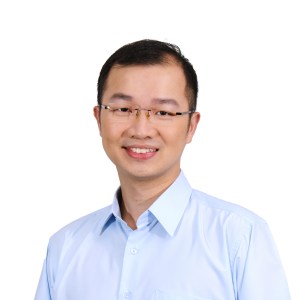
Mr Chua Kheng Wee Louis (Sengkang): Mr Speaker, as I have shared in my Inland Revenue Authority of Singapore (Amendment) Bill speech on Budget Day itself, FY2023 did turn out to be another year of record tax collections, after significant increases in IRAS’ tax collections over the last two years, a jump of around 38% to $68 billion in FY2022.
Overall operating revenues increased by $13.3 billion in FY2023 compared to a year ago to $104.3 billion, and this is also $7.6 billion higher than projected operating revenues first revealed in Budget 2023 last year. What is noteworthy is that this is not solely on the back of volatile revenues such as stamp duties or vehicle quota premiums, but on the back of record levels of corporate income tax, personal income tax and of course, GST revenues, all of which continued to break new record highs. What was most impressive was the 23% jump in corporate income taxes in FY2023, even after a sharp jump of 27% the year before, with corporate income taxes set to be sustained at record high levels of around $28 billion. This was not surprising, given news of record profits from some of the larger Singapore corporates, from DBS Bank to Sembcorp Industries.
Positive revisions to FY2022 data also meant that instead of a revised deficit of $4.2 billion, FY2022 saw a surplus of $1.7 billion instead. While the overall fiscal position for FY2023 is still projected to be in deficit, this was largely due to an increase in special transfers, chief of which is the recent inclusion of the $7.5 billion Majulah Package Fund, without which FY2023 would have seen a $3.9 billion surplus instead.
It is important to put into context the record operating revenues and improved fiscal position of the Government against the challenging economic environment that we faced in 2023. GDP growth slowed to a mere 1.1%, while inflation was a source of consternation for many Singaporeans, which was what led the WP to raise the cost-of-living Motion in Parliament late last year, to share ideas and possibilities of reducing cost of living pressures by way of policy change, many of which are structural.
In line with the theme of providing constructive feedback and ideas, I have two revenue measures for the Government to look into, after studying the revenue and expenditure trends over the past years. This would be in addition to revenue raising moves that my colleagues and I have shared in past Budget debates, such as the issue of wealth taxes which I have raised previously, where even though we may have raised the highest personal income tax bracket and property taxes, the likes of wealthy individuals earning dividends and capital gains income from their vast wealth while renting luxury apartments in Singapore will still not be taxed directly.
Firstly, looking at revenue collections as a percentage of GDP from FY2018 to FY2024 in Table 3.2b, over the years, customs and excise taxes is one of few categories which has seen a decrease in contribution as percentage of GDP over the years, despite higher tobacco excise duties from last year and the inclusion of carbon taxes in this category. In line with the spirit of wealth taxes, there is room to study the potential to have liquors being taxed on an ad valorem basis, in light of our suggestion of raising so-called “sin taxes”. This need not result in any increase in duties on everyday alcoholic beverages, but it would be much more equitable if the so-called “atas” wines of the world, which easily cost thousands of dollars a bottle, incur a higher excise duty compared to the $20 a bottle wine found in the supermarket.
Second, I note that casino taxes were raised in 2022. In spite of this, betting taxes as a percentage of GDP have been flat in past years at around 0.5%. Given that gambling duties have been unchanged since 2014, there is room to look into raising the relevant gambling duties, which could also serve a deterrent function.
Moving on to the main body of my speech today, I will touch on the importance of structural changes compared to one-off handouts, where I will highlight the need for structural improvements to personal income taxes and corporate income taxes to better support individuals and businesses while keeping our tax system progressive and up to date, and also touch on the urgent and important topic of retirement adequacy.
Conceptually, I believe that: one, it is important to put in place structural levers in our system as opposed to relying on one-off schemes, which may either be new or have to be refreshed year after year, incurring a lot of administrative costs and resources to operate on the part of the Civil Service, and creating much uncertainty on the part of Singaporeans; two, it is also important to direct our resources to those who need them the most, rather than broad-based handouts to everyone, which could lead to allegations of Budget measures being part of an “Election Budget.”
Take the CDC Voucher scheme, for example. While I am sure all Singaporeans appreciate cash handouts amid the cost-of-living crisis, the CDC Voucher scheme evolved from one aimed at helping Singaporean lower-income households defray their cost of living in 2020 to one where all Singaporean households are eligible. The amounts given have also varied quite significantly over the years, and it remains a question whether the scheme will be a permanent one, or if so, whether all households will continue to qualify and just how much are the vouchers going to be worth.
Moreover, as opposed to the existing GST Voucher scheme, there appears to be many operational challenges faced by Singaporeans when trying to claim the CDC Vouchers, such as those who are renting their flats and sharing the same address with other households, those living in shelters and also those who no doubt may belong to the same household but are facing difficult familial relationships.
On personal income taxes, I note a tax rebate worth 50% of tax payable, or up to $200 was introduced in YA2024, similar to YA2019. However, instead of a one-off rebate, we are better off raising the bottom-end of marginal resident personal income tax rates and increasing the tax-free threshold for the first $20,000 of chargeable income to reflect inflation over time. This was what I raised in a Parliamentary Question back in 2022.
Similarly, on corporate income tax (CIT), a CIT rebate of 50% of the corporate tax payable will be granted to all taxpaying companies, whether tax resident or not, for YA 2024. In my speech on the Income Tax (Amendment) Bill in 2021, I suggested raising the level of progressivity in our corporate income tax regime to better support our local SMEs.
Even as other support for companies to build capabilities is being strengthened, I hope the Government would consider providing greater tax relief to our SMEs, such as by raising the tax exemption limits or by introducing schemes similar to the two-tiered profits tax rate regime in Hong Kong, which they introduced in 2018 to relieve the tax burden for SMEs in particular.
This is important given that in Budget 2018, the Government announced tighter restrictions around our tax exemption schemes. For an SME making $300,000 in chargeable income for example, total corporate income tax paid before any rebates would be close to $34,000 or an effective tax rate of 11.2%, compared to around $25,000 or an effective tax rate of 8.4% based on prior rules.
Having such corporate income tax reforms built into the tax regime would also provide for greater certainty, as opposed to the current CIT rebates which significantly vary year after year from 20% to 50% in terms of the rebate, to a cap of $10,000 to $40,000 in the last decade from YA2013 to YA2024.
It is critical to ensure that we continually re-invest in our local SMEs, the backbone of our economy representing 99% of all enterprises here and responsible for the jobs of 71% of employees, to enable Singapore to stay competitive in a post-BEPS world. Otherwise, we could well see a reduction in our tax base and employment levels, should our local SMEs shift more of their activities to other jurisdictions in response to the new business environment.
Touching on the topic of BEPS2.0, which I have also spoken about in past Budget debates, the time for introducing adjustments to our tax system is finally before us. Deputy Prime Minister Wong has also announced the introduction of two components of Pillar 2, the Income Inclusion Rule and the Domestic Top-up Tax.
As I have asked last year, while precise numbers may not be feasible, does MOF not have a range of blue sky and grey sky projections as to the impact of the implementation of a domestic top-up tax? Especially when we are looking at the Income Inclusion Rule and the Domestic Top-up Tax taking effect in less than a year’s time, for businesses’ financial years starting on or after 1 January 2025?
To put into context my question, the OECD has published a working paper earlier this year, which finds that the global minimum tax “can raise between US$155 to US$192 billion of additional CIT revenues per year, with revenue gains accruing to all jurisdiction groups”. Moreover, estimated participating countries categorised as “investment hubs,” which includes Singapore, would have the largest expected gains from the reforms, with corporate income tax revenues rising from 14% minimum to up to 34%. If this is factually incorrect, given that the MOF will have a better basis to make its own estimates, then I hope the Deputy Prime Minister can correct this in his round-up speech.
Instead, the Deputy Prime Minister shared in his Budget speech that he does not expect the new moves to generate “net revenue gains,” due to the “significant spending required to stay competitive.” To say so is just akin to saying any forms of tax rate increases, from personal income tax, stamp duties to the GST, is not going to generate net revenue gains due to higher spending needs.
I understand that this could be due to the introduction of Refundable Investment Credits and the net effect of BEPS 2.0 and the Refundable Investment Credit is to an extent also dependent on just how generous the EDB and ESG are in awarding these Refundable Investment Credits to companies.
I agree that only time can tell when it comes to the actual revenue gains, as we await the roll-out of Pillar 2 globally, but it would be a sad day if countries go against the spirit of the reforms in the first place.
The BEPS 2.0 reforms were introduced to stop the race to the bottom when it comes to sovereign tax policies, and to facilitate international collaboration to end tax avoidance. Let me repeat that the OECD has shared that with the two-pillar solution, all economies will benefit from extra tax revenues – all economies. I hope the additional tax revenues from BEPS 2.0 will not simply be in substance returned to MNEs through other forms.
Finally, let me touch on a topic which is close to my heart – and that is retirement adequacy. It is also a pressing issue which requires urgent and decisive action, given our rapidly ageing society. While there are several good moves to improve retirement adequacy, like raising the ERS and enhancing the Silver Support Scheme and MRSS, I am concerned about the closing of the CPF SA after the age of 55, and the lack of longer-term measures to help Singaporeans grow our retirement nest egg sustainably.
In itself, I do not have qualms about the closing of the SA. However, this is a step backwards when it comes to ensuring the retirement adequacy of Singaporeans, and much needs to be done to truly strengthen retirement adequacy for the seniors today and tomorrow.
When the compulsory annuity scheme CPF LIFE was introduced, the SA continued to provide flexibility to CPF holders to access or “touch” their retirement savings, while providing a decent interest rate floor of 4%.
Deputy Prime Minister Wong said in his Budget speech, “The remaining SA savings will be transferred to the Ordinary Account (OA). Of course, members can voluntarily transfer their OA savings to the Retirement Account (RA) at any time, up to the revised ERS, to earn higher interest and to receive higher retirement payouts.” Is this the full picture, though?
Singaporeans will know that funds in the RA will be used to pay the premiums for their CPF LIFE plan, meaning to say we can no longer withdraw the funds as we wish. It is also true that from the age of 55 to, say, the payout age of 65, these RA funds continue to earn the same interest rate floor of 4% as with the SA. So far, so good. But unbeknownst to many, from the moment payouts commence, any interest earned will not accrue to the CPF holder, but it is pooled together under CPF LIFE for all members.
An FAQ by the CPF Board says it best, that interest earned on CPF LIFE premium is not included as part of the amount paid to beneficiaries when one passes away. I understand that this is the concept behind annuity schemes to enable members to get lifetime payouts. But it also means that even though the stated interest rate of the SA and the RA is identical, the actual yield that is earned by the two accounts could not be more different. And that based on the latest average life expectancy of Singaporeans, it is unlikely that the effective yield for RA savings will exceed that of funds that would have been in the CPF SA.
Moreover, whenever I raise the issue of CPF interest rates in Parliament, the response by various political officeholders has been to stress the attractiveness of prevailing risk-free interest rate floors of 2.5% for the OA and 4% for the Special, Medisave and Retirement Accounts (SMRA) over the past two decades of protracted low interest rate environment. The closure of the SA from age 55 takes the shine out of such counter-arguments, in my view.
As Deputy Prime Minister Wong reminded us, we are facing a change in environment from very low interest rates to a more normalised period where interest rates will be higher for longer and the era of easy money is over. It is in the context of this sea change that we should look at CPF interest rates going forward. How then should we allow the laws of mathematics and compounding to work for our seniors’ retirement funds?
I continue to stick by what I spoke about in the Reserves Motion earlier this month, and that is to enable all Singaporeans, not just our reserves, to directly participate in the long-term returns from the Government’s fund manager, GIC, with adequate safeguards in place. This is especially pertinent when we consider the source of funds for the GIC in the first place, a part of which is indirectly derived from CPF savings via the Singapore Savings Bonds (SSGS bonds).
As I have shared, based on the 20-year nominal returns of the GIC portfolio of 6.9% and the CPF-OA rate of 2.5%, based on a simple rule of 72, the number of years it takes for our CPF monies to double goes from about 10 years based on GIC’s returns, to 29 years based on the prevailing OA rate. The effects on our ability to save for our own retirement is tremendous.
I listened to Minister Indranee Rajah’s explanation that in 2014, then Deputy Prime Minister Tharman explained in Parliament at great length how we set our CPF interest rates and manage CPF proceeds. I went to do a bit of research on this into the Hansard and realised I was far from being the first to bring this up. Then Deputy Prime Minister Tharman’s explanation was in response to PAP Member of Parliament Mr Inderjit Singh, who also questioned whether our 2.5% interest rate paid out to the CPF OA is fair compensation for Singaporeans who have left their savings locked up for so long.
In fact, if I go back further in time, many MPs from the PAP, WP, NMPs, have all suggested allowing regular Singaporeans access to better investment returns from the Government’s investment entities like the GIC. PAP MP, Dr Lily Neo, called on the CPF Board to work with GIC, and perhaps peg the interest rates at two percentage points below GIC’s returns. NMP Mr Siew Kum Hong quoted an academic paper which stated that: “To the extent that the GIC’s return on investments has been higher than the return actually credited to CPF members, a recurrent, highly regressive, largely implicit tax on the CPF wealth has been borne by CPF members.” PAP MPs Mr Ong Kian Min and Mr Sim Boon Ann called on the Government to share with CPF members surpluses it makes on CPF monies. And Mr Ong even said, “I cannot understand how the Government can say it will not be responsible for providing for my retirement, but I must lend the Government my retirement savings for investments and any gains earned on my money is not my money.” Finally, Ms Sylvia Lim from the WP also called on the Government to do more to boost CPF returns while managing the risks, especially after the 2002 Economic Review Committee’s recommendations to do so via private pension plans.
These are all words of wisdom by those who came before me, and two decades on, continue to resonate so deeply with me. How many more Singaporeans today could have met their retirement sums, compared to the four in 10, five in 10 today, had we implemented these suggestions back then?
If for some reason the Government is still adamant that we are unwilling or unable to allow Singaporeans to share in the fund management expertise and returns of the GIC, then the least we can do is to urgently implement the Lifetime Retirement Investment Scheme (LIRS), something which I have been repeating in each of the last three years so that we can better support Singaporeans’ retirement needs.
Let us remember that eight years ago, in 2016, then Minister for Manpower Mr Lim Swee Say, had then on behalf of the Government, accepted the recommendations within part two of the CPF Advisory Panel’s report, which included the introduction of the LIRS as an additional investment scheme. To quote then Minister Lim: “These additional options will help address the concerns some Singaporeans may have with regard to the rising cost of living in retirement and the desire for higher expected investment returns for those who had to take on some investment risk.”
One of our fellow MPs today, Mr Saktiandi Supaat, was a part of the CPF Advisory Panel too, where Chairman Prof Tan Chor Chuan articulated the limitations of the CPF Investment Scheme (CPFIS) and put it so aptly, that “the Panel believes that there is a need to provide an additional investment avenue that can better help such CPF members earn higher expected returns than the CPF interest rates in a simpler way than CPFIS.”
The big question I have is, when will the Government finally be ready to roll this out? Is it still prepared to do so? I hope the Government is cognisant that the longer the delay, the higher the opportunity cost and real cost to Singaporeans’ retirement savings.
To conclude, Mr Speaker, I appreciate the Government providing for one off goodies and handouts to Singaporeans and Singapore companies, on the back of yet another record high operating revenues, which were $13 billion higher compared to a year ago. However, it is important that we put in place structural levers in our system as opposed to relying on one-off schemes and I have suggested changes to our personal and corporate income tax systems to illustrate this point. And finally, we are all aligned with the urgent need to strengthen Singaporeans’ retirement adequacy, so let us not shut Singaporeans out of attractive, sustainable and practical solutions to boost our retirement funds.
Mr Sharael Taha (Pasir Ris-Punggol): In the GST amendment Bill, I have also challenged the perception from some of the members that BEPS 2.0 alone, will be sufficient to make up the “hole” left behind by not raising GST. I am glad that in yesterday’s speech, I may have heard Mr Louis Chua agreeing with Deputy Prime Minister Wong’s position, that there will be spending to offset impact of implementing BEPS 2.0 and there is still a lot of uncertainty on how businesses and countries will react.
The Member goes on to say that he hopes that the introduction of Refundable Investment Credit does not go up against the spirit of the global BEPS 2.0 implementation. He also mentioned that he hopes that it is not returned back to MNEs in other forms.
I find that as an extremely worrying position. Similar to my speech, the Leader of Opposition quoted Deputy Prime Minister Wong’s speech that the “international environment has darkened dramatically” and we expressed caution towards Singapore’s future in the uncertain global environment.
I can tell you for certain, it is getting increasingly difficult to attract foreign investments into Singapore and I am glad that the Refundable Investment Credit is an additional tool introduced to assist in attracting investments into Singapore. Mr Chua mentioned that we should not go against the spirit of BEPS 2.0. But I am worried if philosophically, he is comfortable with limiting the capability of the tools that we have to attract investments?
To attract investments – our lifeblood for Singapore – here is where theory diverges from reality. Where we are fighting tool and nails for more investments into Singapore, is this what Mr Louis Chua is advocating for? I can assure those in the chamber, that attracting investment into Singapore will continuously be more challenging and we want to equip ourselves with the full disposal of tools to attract good investments into Singapore to create good jobs for our people.
Mr Speaker: Mr Louis Chua.
Mr Chua Kheng Wee Louis (Sengkang): Thank you, Mr Speaker. Just one quick clarification for the Member Mr Sharael Taha. So, if I am hearing him correctly, is he saying that we should then go against the spirit of BEPS 2.0?
Mr Sharael Taha: I would like to thank Member Mr Louis Chua for his question. Mr Speaker, Sir, I am not saying that we should go against the spirit of BEPS 2.0. I am just saying that: when it comes to attracting investments, we should not limit our capability to attracting investments. Which would mean, requiring us to provide certain benefits or support, in order to bring the investments into Singapore.
The Deputy Prime Minister and Minister for Finance (Mr Lawrence Wong): Some Members, Mr Liang Eng Hwa, Mr Louis Chua and Mr Pritam Singh, had sought clarifications on the potential revenue impact of the BEPS Pillar Two moves. The OECD’s estimates imply that investment hubs could see a Corporate Income Tax revenue gain ranging from about 17% to 38%. This translates to a revenue gain of $5 to $11 billion per year for Singapore. That is based on OECD’s estimates. But these estimates have not taken into account how MNEs may respond and the possibility of their activities moving out of Singapore, thereby reducing our tax base.
Possibly for this reason, Hong Kong and Switzerland, which are also investment hubs, have estimated their revenue gains at $1.7 billion to $2.4 billion respectively; much lower than what the OECD has put out. So, these data points are suggestive of what the range for Singapore could be, anywhere from around $2 billion to $11 billion.
But we are really not sure where we will end up because there are so many unknowns. I think no one is sure, to be clear. The OECD has also made very clear these are estimates. No one can be sure what the actual impact will be. What we are doing is to engage the MNEs better to understand how they are likely to respond, especially taking into account some of the moves we have made in this Budget and we will certainly provide our own revenue estimates in due course.
In any case, any revenue impact from the Pillar Two moves will only materialise from FY2027. So, this is not something for this financial year. We have some time. We are making the assessments. We are doing the detailed projections and we will come back with detailed revenue updates.
Of course, the actual amount of revenue gain and how long it will last will depend on how the competitive landscape evolves and also how much we have to re-invest into the economy. Several Members said that the whole point of BEPS is to tilt the playing field in favour of governments and make MNEs pay more taxes. I think Mr Louis Chua and Mr Jamus Lim highlighted that. I agree. That is the intent of BEPS.
Mr Speaker: Mr Louis Chua.
Mr Chua Kheng Wee Louis (Sengkang): Thank you, Mr Speaker. Just two areas of clarification for the Deputy Prime Minister. The first is on CPF. Does he believe that it is adequate to plan for retirement adequacy via risk-free returns instead of taking reasonable risks via a diversified, well-managed portfolio for the long term? So, in other words, if our investment entities are good enough for our collective reserves, why is it not good enough for individual Singaporeans’ retirement reserves?
The second is in relation to LRIS, which I mentioned during my speech as well. Again, as the Deputy Prime Minister is now Deputy Prime Minister and soon to be Prime Minister, does he intend to still follow through on the Government’s acceptance of the recommendation in 2016 on LRIS? If so, when and, if not, why not?
The Deputy Prime Minister: Sir, the returns may be risk-free from the CPF members’ perspective, but they are certainly not risk-free rates at all. I mean, if you want risk-free rates, then they will be much lower. The reason why we are able to provide such higher rates, compared to market risk-free rates, is because there is Government support behind the CPF system and we are providing additional interests up to 6% for those with lower balances. We are designing a system that will ensure that all Singaporeans who work consistently, contribute to their CPF, will be able to have their basic retirement needs met. That is our objective.
Going beyond that, can we improve it? As I said, we will continue to study. There are complexities in this and it includes the LRIS that was highlighted. It is not so straightforward because once you introduce a new element of risk in the hope of getting better returns, you have the issue of what happens when seniors retire in a bad year. Then how do you smoothen that out? Once you smoothen that out – Mr Louis Chua is from finance – insurance does not come free, who pays for the insurance? It has to come through the returns. Then, are you able to provide a better product than what is the current CPF rate? Those are the considerations and we will continue to study. We are not saying never but we will continue to work on making the system better.
26, 27, and 28 February 2024
https://sprs.parl.gov.sg/search/#/sprs3topic?reportid=budget-2328
https://sprs.parl.gov.sg/search/#/sprs3topic?reportid=budget-2336
https://sprs.parl.gov.sg/search/#/sprs3topic?reportid=budget-2341
 Office of the Leader of the Opposition