
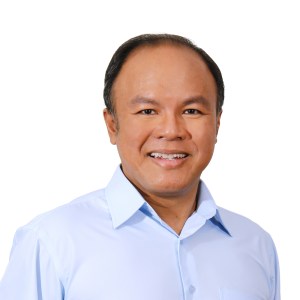
Mr Muhamad Faisal Bin Abdul Manap (Aljunied): Mr Speaker, Sir, in my time as a MP representing Kaki Bukit division of Aljunied Group Representation Constituency (GRC), I have had many interactions with Singaporeans, individuals and families from low-income households. These households have been most affected by the rising cost of living in Singapore and the issues they face are multi-faceted.
When Deputy Prime Minister Lawrence Wong delivered the Budget Statement earlier this month, I was heartened that there was significant attention given to this segment of our country’s population. Today, I will speak with that light in mind.
It was reported on 12 February 2024 that the lowest earning households in Singapore saw their real incomes dropped by 1.7% in 2022, after accounting for inflation. The same report, data from the Department of Statistics, showed the median household income for the same period rose by 2.8%. In response, the Government has ramped up support packages for the lowest earners in this year’s Budget, adding onto the measures that had been announced and implemented in 2023.
Deputy Prime Minister Lawrence Wong has also provided some details on the ComLink+ progress packages, where families with children from low-income households can receive financial top-ups when they work with family coaches assigned by the Ministry of Social Development and Family (MSF) on an action plan to meet certain goals. These goals include having children enrolled in preschool education, gaining employment, improving their financial stability and saving for home ownership.
Sir, I gather from the information released to-date that one of the goals of the ComLink+ progress packages is to prevent inter-generational poverty from taking roots any further and I support moves that prevent further stratification of society.
In my experience, most, if not all, parents want to send the children to preschool and share a common desire to see their children get a good education. What often prevents them from sending their children to school are other tangible factors: lack of places in nearby centres, concerns over their ability to pay the fees even after subsidies and financial assistance, pick-up and drop-off timings because the parents are working shift, amongst others. Top-ups to the Child Development Account (CDA) and useful throughout a child’s education journey. However, they are far less of an impact on the immediate challenges a household may face in trying to keep their little ones in preschool.
I welcome the lowering of fees at childcare centres under the Partner Operator and Anchor Operator Schemes as well as the expansion of subsidies. I believe this will go a longer way towards helping lower-income families send their children to preschool.
On the matter of employment, low-income earners are among the most vulnerable segments of our workforce. Aside from their lower wages, job security is another concern for many low-income earners, particularly those in professions with no specialised skills. Low-income earners worry about being replaced easily or retrenchment, which can have an upsized impact on their families’ livelihoods. I look forward to receiving more details about the assistance that the Government is planning for the involuntary unemployed.
The WP has called for the introduction of redundancy insurance since 2006. By whatever name, a scheme that provides a net for Singaporean workers who find themselves suddenly out of job due to events out of their control is something that is needed in a time where job security is not assured.
Sir, I note that the Government will be ramping up support for reskilling and retraining of our workforce. I believe that despite this move, there will remain a sizable portion of our population that is wary not because of the support level but because they are unsure of whether and undergoing reskilling will improve their earnings and job security. The other generations may also need more help in assessing their training funds under SkillsFuture as many of them are not IT-savvy.
Sir, I believe every Singaporean expired to own a home for themselves. But for young Singaporeans from low-income households, the path to home ownership is more fraught with risks. The two primary concerns are affordability and availability.
I note that support under the employment and saving packages are kept at $30,000. If you assume a 50/50 split in the amounts the household received for each section. The maximum amount of household receives for purchasing their own home is $15,000.
After including the grants, the price of a 3-room flat in the February 2024 launch of Build-To-Order (BTO) projects ranges between $127,000 and $172,000. Assuming the household successfully applies for a housing loan, the downpayment involved could range between $25,400 and $34,400. Even after accounting for the household contribution, the total level of support would be insufficient for the downpayment. Families with children find it more difficult to save to buy their own house because there are more immediate needs to be met daily.
The wait for a BTO unit can range from around three years at the fastest, assuming no construction delays. Even for Singaporeans from middle-income families, the long wait throws a spanner in the works when they are planning for marriage and children.
For lower-income families with children, the wait can have a bigger impact. It is a sad and unfortunate reality that the living environments in rental flats are often not conducive for young children. There are stresses and pressures that arise that have an impact on their longer-term development.
A more proactive approach may be required, for example, giving such households, which are ready to purchase their own home, priority in the in the Sales of Balance Flats exercises or providing them assistance with purchasing a resale flat at subsidised prices.
Sir, there is a segment of low-income households who face a particular problem with securing housing: Singaporeans with foreign spouses who have not obtained permanent residence. They are not eligible to apply for a flat under the Public Rental Scheme as that spouse is not a permanent resident (PR). They also do not have enough income and/or savings to purchase their own flat. The situation affects their relationship with their spouse. The Singaporeans whom I met in this situation have been unsuccessful in applying for their spouse to obtain PR status or even a Long-Term Visit Pass. They are effectively deprived of having a matrimonial life with their spouses in Singapore. Some of them also rely on their spouse to be their caregivers. We need to consider streamlining a path towards naturalising foreign spouses in Singapore which includes housing policies for such families.
Sir, my final point is one that I have raised on previous occasions. I would like to reiterate my call that Singapore adopts the social protection framework developed by the International Labour Organization, or ILO, an introduction of an annual social protection report which tracks the effectiveness and efficacy of our policies to uplift society. With clear key performance indicators, such as improved per capita household income benchmarked against the median, we can better track how well policies are working and do the necessary fine-tuning.
Sir, the United Nations is one that takes care of all segments and leave no one behind. I believe this is the sentiment all of us can get behind. Sir, I support the Budget.
27 February 2024
https://sprs.parl.gov.sg/search/#/sprs3topic?reportid=budget-2338
 Office of the Leader of the Opposition