
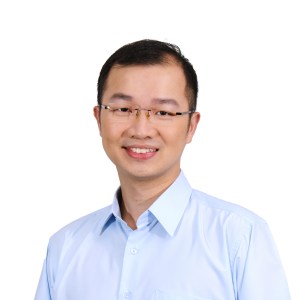
Mr Chua Kheng Wee Louis (Sengkang): Incorruptibility is fundamental to the success of the Singapore Government. Yet, public declaration of assets by Ministers is not practised here although Ministers do disclose this information as well as company directorships to the President via the Prime Minister in confidence as per the Code of Conduct for Ministers.
As described in the Code of Conduct, this would help counter potential allegations of corruption and unexplained wealth, and to avoid potential conflicts between private interests and public responsibilities. Public declarations would thus go a long way in ensuring public accountability, the Singaporeans to whom the executive serves, and not just accountability to the President.
In countries like the United Kingdom (UK), Ministers are required to disclose their financial interests publicly, including investment properties. Perhaps we can consider adopting such a practice in Singapore as well. Such declarations would go some way to bridge the trust gap between Singaporeans and their elected officials, and also help to prevent the spread of misinformation.
For a start, we need not make the full disclosures of sensitive details mandatory. For example, in the case of residential properties, unit numbers can be redacted to protect the privacy of the Minister involved.
I am sure that this practice will be appreciated by Singaporeans. The question of whether our Ministers can be trusted to scrupulously avoid any actual or apparent conflict of interest between their official duties and private financial interests, as the Ministers’ Code of Conduct requires them to do, has been raised before in this house.
During a Parliamentary Session on the rental of 26 Ridout Road last year, People’s Action Party Member of Parliament Poh Li San suggested that it would be in the interest of transparency for Minister Shanmugam and Minister Vivian to declare all their property assets. However, this was not a requirement under the Code of Conduct at the time. It should be.
The Minister for Education (Mr Chan Chun Sing): Ms He Ting Ru asked whether our regulations or practices need any updates to ensure that our governance frameworks are not compromised and Mr Louis Chua asked about making assets declarations public for Ministers. I think I have responded to these topics previously, extensively in past Parliamentary replies, but if I may, I will just reiterate a few things.
I think different countries have different rules for their people and organisations and as all of us will agree, no one rule is a panacea to prevent corruption or lobbying.
But what we need to do is to look at the system holistically. What we also need to do is to look at the outcome that we have achieved and ask ourselves what is the scale and magnitude of our problem. Putting in new and more rules does not necessarily solve the problems that we may not even have to start with. Whenever we put in new rules, we must also be careful if it causes any unintended consequences.
For example, I just checked the data that was quoted by some Members about some of the countries that have perhaps adopted some of those rules.
In the Corruption Perceptions Index, Singapore in the last five years has been ranked consistently between number three and number five. But those countries who supposedly have some of these more elaborate rules are actually ranked much lower. For example, the UK was ranked somewhere between 11 and 20.
So, I think when we look at how to make sure that we retain the trust of our people, we must look at it at a system level. If I may reiterate what I have said previously, this must occur at three levels.
First, we must make sure that we select good people with the right values to understand not just the letter of the law, but the spirit of the law and uphold them.
Second, we must work as a system, as a team, to make sure that we look out for one another, check one another’s blind spots, help to prevent one another from falling into a situation where they might be compromised.
And third, we must have layers of checks internally and externally to pick up issues whenever there are problems.
That is how we have managed to keep our system relatively corruption-free, lobby-free all these years. But we will be the first to admit that no system is perfect and the situation is evolving and every time we put in rules, there will be parties out there that will try to go around our rules and we have to keep constantly evolving our own rules to make sure that we are never complacent.
In trying to copy other people’s rules, we must see what they have been able to achieve versus what we have been able to achieve, what problems they have been able to solve versus what problems we are trying to solve. There is no magic answer to this.
And we should also have a care for the confidentiality of the information, the privacy concerns of the senior officers in the Public Service, including the political office holders. Why stop at the Ministers? Why not the Members of Parliament? Why stop at the Permanent Secs? Why not the Directors? I think for every rule that we put in, there are implications that we should consider carefully and ask ourselves whether the price that we pay is commensurate with the problem that we are trying to solve.
Prime Minister’s Office
28 February 2024
https://sprs.parl.gov.sg/search/#/sprs3topic?reportid=budget-2344
 Office of the Leader of the Opposition