
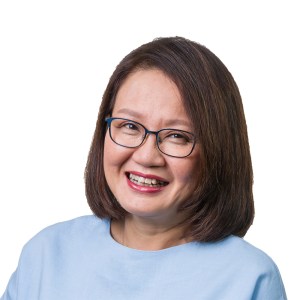
Ms Sylvia Lim (Aljunied): Sir, Singapore has been a beneficiary of ASEAN membership since the organisation’s founding in 1967. It provided a means for regional states to de-emphasise differences and work together – both during the Cold War and after.
With regard to economic cooperation, we are collectively each other’s largest trading partners – outweighing both China and the US. Much of the foreign direct investment coming into Singapore is then reinvested in other ASEAN member states to the benefit of our economy and businesses. For a long time, ASEAN centrality was based around its ability to convene events that bring together different, even rival actors around the world. It was a way for Singapore and fellow members to amplify our voices internationally.
ASEAN today faces different challenges. There are increasing questions about improving and maintaining internal cohesion. Some prime examples, include Myanmar and the difficulties in promoting negotiations among the warring parties; the South China Sea, especially how to promote peaceful management of disputes; and addressing erosion and other riparian issues along the Mekong River.
Additionally, the intensifying US-PRC rivalry has also put pressure on the governments, societies and interests of different ASEAN members to move in divergent directions. Conditions may well get worse, given the continued trouble for the Chinese economy and US domestic politics leading up to and following the elections in November this year. These circumstances mean that more than ever, Singapore and fellow ASEAN members need an ASEAN that is suited for the times.
I would like to ask how the current Government is working with fellow ASEAN members to strengthen, update and reform ASEAN to make sure it continues to serve our collective needs going forward. How do we make the concept of ASEAN centrality more concrete, such that it has a continued ability to set regional agendas and perhaps even bargain collectively? Changes may include, for instance, investing in the institution, such as by increasing the budget and capacities of the Secretariat to ensure that it can perform its current mandate more efficiently and effectively. What are plans to collaborate with other extra-regional partners to augment the work of ASEAN in defence of Singapore’s interests? If we are committed to the ASEAN project, then we must make it work.
The Second Minister for Foreign Affairs (Dr Mohamad Maliki Bin Osman): ASEAN is another platform to do so. ASEAN forms the cornerstone of our open, inclusive and rules-based regional architecture. Its success is critical to the success of all its members. Ms Sylvia Lim asked if ASEAN would require reforms or a bigger budget to be a more effective organisation. We will ensure that the ASEAN Secretariat is adequately resourced so that they can fulfil their functions and support the region’s needs. This is as ASEAN also takes steps to strengthen itself and introduce more effective work processes.
Ms Lim and Mr Liang Eng Hwa have asked how ASEAN would be able to maintain its relevance in today’s geopolitical environment. Indeed, ASEAN Centrality has become even more important in the face of intensifying intra-ASEAN challenges and major power rivalry. Our priority now is the implementation of the ASEAN Outlook on the Indo-Pacific (AOIP). Under the AOIP, we are exploring concrete projects with our partners in four priority areas: economy, maritime cooperation, connectivity, and the UN Sustainable Development Goals 2030. Through these projects, we aim to increase ASEAN’s mindshare, promote mutual benefit, and keep external partners vested in the stability of our region.
The Chairman: Ms Sylvia Lim.
Ms Sylvia Lim: Thank you, Chairman. I have a clarification for Minister for Foreign Affairs on Israel. I understand that late last year, Singapore appointed a resident ambassador to Israel and it was the first time that Singapore actually has a resident ambassador there despite having diplomatic ties with Israel for more than 50 years.
So, I would like to clarify, what is the significance of this move now and is it in any way related to 7 October, or is it part of a longer-term strategy?
Dr Vivian Balakrishnan: Thank you, Mr Chair, and I thank the Member for that question. The timing of our resident ambassador taking up post had nothing to do with 7 October. It was just fortuitous or unfortuitous, depending on your point of view.
The answer is yes, it was part of a longer-term plan.
Beyond the travails that Israel has gone through, if you just stop thinking about the conflict but just look at their achievements economically, their achievements technologically, especially in cyber, in water, in agriculture and in many of the advanced technologies, it is a place with talent and technologies that we want access to.
As the Member said, our diplomatic ties with them go back a long time. But we do not have enough people to place all over the world. Right now, in terms of ambassadors, resident ambassadors, I think the number is just around 40. If you include all the consulates, we have maybe about 50-odd consulates in the world, in a world with about 200 states!
So, the short answer to the question is, it had everything to do with long-term plans and long-term opportunities.
Ministry of Foreign Affairs
29 February 2024
https://sprs.parl.gov.sg/search/#/sprs3topic?reportid=budget-2354
 Office of the Leader of the Opposition