
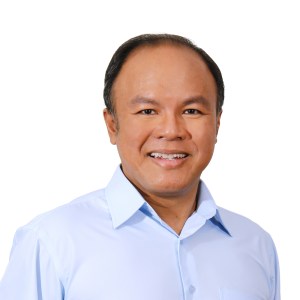
Mr Muhamad Faisal Bin Abdul Manap (Aljunied): Sir, a couple of weeks before the Budget Statement, I received an email from one of my residents, Mr X, who shared his plight of not qualifying for a subsidy for the SPED school fees for his child as he did not meet the per capita income criteria. He mentioned that his per capita income of $1,000 exceeded the qualifying amount by $250. Mr X is the sole breadwinner, supporting his wife and three children. His wife is a homemaker, not by choice, due to the caregiving of their special needs child.
He lamented that middle-income Singaporeans were being deprived of subsidies that are made available to lower-income groups. He felt that with the rising cost of living, a middle-income family like his should be eligible for a fee subsidy.
Therefore, Sir, I am glad that the Government has decided to reduce the upper limit of the SPED school fee from $150 to $90, announced in the Budget Statement as the first step in reducing the financial burden of families with special needs child. Nevertheless, I do feel that more can be done to help middle-income families with a child who has special needs.
In view of this, I agree and fully support the call made by my fellow Aljunied GRC Member of Parliament, Mr Gerald Giam, through his Budget speech, asking the Government to set the fees for SPED schools at the same level as mainstream schools – namely $13 – on the basis of creating a more inclusive society.
Sir, I note that under the Early Intervention Programme for Infants and Children (EIPIC) Programme, a tiered approach is applied to determine the out-of-pocket expenses for qualifying families. While the Government considers the Workers’ Party proposal towards equalising the fees between SPED schools and the mainstream ones; can it, in the interim, adopt a similarly tiered approach to ensure more equitable outcomes and provide much-needed relief for middle-income families with a special needs child?
The Second Minister for Education (Dr Mohamad Maliki Bin Osman): Mr Faisal Manap and Ms Rahayu Mahzam asked how we can help students with moderate-to-severe SEN, who face higher costs due to the customised and specialised care required. The Government has worked closely with the community to increase funding for special education (SPED) schools over the years, and spends more on education per child in a SPED school compared to a mainstream school.
The income eligibility criterion for the SPED Financial Assistance Scheme was also increased last January. Between 2020 and 2023, we worked with social service agencies (SSAs) to reduce maximum fees for Singapore Citizens in SPED schools from $350 to $150.
We will do more. As outlined in the Budget Statement, we have worked with nine higher-fee SPED schools serving students with Autism Spectrum Disorder and Multiple Disabilities to lower their fees by up to 60% for Singapore Citizens by mid-2025. With this, the maximum monthly fees for any Singapore Citizen in SPED schools will be reduced from $150 to $90. More than 3,500 students and their families will benefit.
I would add that about 50% of all SPED students currently pay similar fees as students in the mainstream schools. Together with efforts by MSF, I assure Members that SPED students and their families will be supported in their educational and caregiving needs.
The Chairman: I will squeeze in one or two more clarifications. Mr Faisal Manap, a quick one.
Mr Muhamad Faisal Bin Abdul Manap (Aljunied): Sir, I would like to seek a point of clarification from Minister Chan. I heard Minister acknowledging that the issue of the Israel-Palestine conflict is a sensitive one a few times in his speech. I just want to know whether did MOE consider in the first place to consult parents of younger students whether they are comfortable to have their child partake in this particular CCE lesson, which touches on sensitive issues like what Minister said? I believe this is done similarly for the Ministry’s sexuality education. So, just one clarification.
Mr Chan Chun Sing: Chair, I would like to make a distinction between sexuality education and CCE lessons.
Sexuality education deals with very personal issues and families’ beliefs, and so forth. CCE issues, we are talking about people relating to one another respectfully and sensitively. It is not talking about the conflict. It is talking about if there are diversity of views, there are differences in view, how do we manage to proceed as one. This is about interpersonal relations, about how we respond as fellow Singaporeans.
The conflict itself is a context, but it is not the key part of it. The conflict, just like any other conflicts, may pull our people in different directions because of their different backgrounds, because of their different beliefs. But the central part of the CCE is to go back to the four things that we mentioned. How do we help our students deal with their emotions when they are being bombarded by information all around, how to distinguish news, fake news, misinformation and others? How do we discuss things respectfully, given and notwithstanding our differences? How do we build a cohesive society, amidst all these challenges?
And I go back to what I said. We are a young nation. Our identity is being formed and it is never easy because we can always be seen as part of some other larger civilisation forces. And our challenge is not to discard our past and build a new future without a past. Neither is our vision one whereby we all cling on to our past and have no common future.
We want the best of both worlds where we deeply understand our past and yet at the same time have a set of shared values, a set of ethos that can bring us forward together as Singaporeans, united as one.
Ministry of Education
1 March 2024 & 4 March 2024
https://sprs.parl.gov.sg/search/#/sprs3topic?reportid=budget-2363
https://sprs.parl.gov.sg/search/#/sprs3topic?reportid=budget-2368
 Office of the Leader of the Opposition