
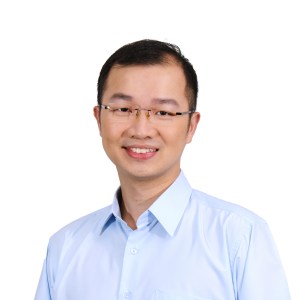
Mr Chua Kheng Wee Louis (Sengkang): Chairman, the reason for my cut on Sovereign Wealth Funds (SWF) transparency is simple. We must demand better standards from the investment managers managing our reserves and take the lead in transparency, accountability and governance standards, as these involve the stewardship of public monies for all Singaporeans, not just its funds’ direct shareholders. We should aim for transparency in both our public and private market investments, regardless of whether it is held by Government of Singapore Investment Corporation (GIC), Temasek Holdings, the Monetary Authority of Singapore (MAS) or even the Central Provident Fund (CPF) Board for that matter.
To many market observers, the gold standard, as in most things SWFs-related, is the largest bank investment management – Norway’s sovereign wealth fund. When it comes to transparency, they publicly share a whole suite of details regarding their operations from individual investments, returns before and after fees, even their voting records.
Their chief executive officer (CEO) has a popular podcast, In Good Company, where he interviews portfolio companies and prefaces every interview openly discussing fund ownership details. They prove you can be transparent and perform well.
On transparency, however, Singapore’s sovereign funds are falling short. Unlike Temasek Holdings, GIC does not even share annual performance figures. I do not think they assess the performance of the third-party fund managers they are invested in merely on a five-year basis.
I understand the rationale of not disclosing its assets on the management, but hiding performance figures does not make sense and merely raises questions.
There is another dimension to transparency. I notice that Temasek Holdings is invested in not just private markets, but many of these investment structures are also increasingly complex, perhaps a reflection of the investment landscape today. An example is that of continuation funds. A Business Times article dated 12 October 2024 was titled, “Temasek CIO Gets Behind Asset-Shuffling Funds Snubbed by Others”. It further goes on to say that the chief investment officer of a Singaporean state-owned investor voiced unusual enthusiasm for continuation funds in which private equity managers shift hard-to-sell assets from an older vehicle into a brand new one. The repackaged assets are then offered to investors, such as Temasek, known as limited partners.
Chairman, these harder-to-value investments need more oversight, not less. Yet, they are becoming less transparent even as investments get more complex.
In accounting, Level 3 financial assets require significant use of internal models and assumptions to estimate fair value as reliable market data is not readily available. Hence, listed companies have to disclose in their annual reports details of valuation methodologies and the assumptions made in their financial statements.
There is a glaring contradiction in all of these, in that even as the Government and Temasek demand good corporate governance from the companies that they invest in, they are secretive about their own performance and remuneration matrix.
Chairman, we must demand better standards from the investment managers managing our Reserves. Any attempts to deflect this via operational independence must be rejected.
The Second Minister for Finance (Mr Chee Hong Tat): Mr Louis Chua spoke about the importance of transparency, accountability and governance of our investment entities.
Sir, we have discussed and explained this many times. There are structures and processes in place to ensure that our investment entities, GIC and Temasek, are good stewards of our reserves for the benefit of all Singaporeans.
On governance, the Government ensures that each entity has a competent Board in place to oversee its Management. The Government holds the Board accountable for instilling good corporate governance and achieving good long-term returns according to its mandate. At the same time, the Government does not direct or influence the investment decisions of our investment entities. This segregation of roles allows our investment entities to invest professionally with a long-term orientation. And that is why during the Prime Minister’s Office’s COS earlier on MAS, Mr Chua also acknowledged that it would not be a good idea for the Government to require GIC to invest part of its portfolio in the local equities market.
On transparency, we have put out a lot of information on our reserves. Temasek’s net portfolio value and MAS’ official foreign reserves are public information. All our entities publish information on their portfolio returns. We have also published information on our reserves management framework and governance on the MOF website.
It is only the size of GIC’s assets under management that remains undisclosed, as this would reveal the size of our reserves. We have explained this many times. And just as our defence forces do not reveal the full extent of our military capabilities, it is not in Singapore’s national interest to disclose the full size of our reserves.
On performance, the Government does not look at one single parameter. Neither do we focus only on short-term performance. Instead, we assess our entities based on their mandates and performance over the long term and consider factors, such as diversification of portfolios and risk adjusted returns which measure investment returns relative to the risk taken.
Our investment entities have performed creditably over the long term. Given the increase in market volatility in recent years, some variation from market indices is to be expected, and what is key is that our entities continue to navigate the uncertainty while maintaining a disciplined long-term approach to generating sustainable returns.
Stewardship and accountability are key principles that we abide by in managing the reserves. We have benefited from the careful work of previous generations, and this Government believes that we must continue to maintain the same fiscal discipline and provide a strong financial foundation for both current and future generations of Singaporeans.
The Chairman: Mr Louis Chua.
Mr Chua Kheng Wee Louis: Chairman, just two clarifications. The first is for Minister Chee. I think he prepared some comments with regard to the disclosure of the size of the reserve and assets under management. But in my speech, I specifically mentioned that actually, that was not what I was talking about. It is more about the performance figures where you have Temasek disclosing annual figures and MAS disclosing annual figures. Why is it that GIC cannot do so?
Mr Chee Hong Tat: Mr Chairman, first, I want to just reiterate what I said in my main reply earlier. I said all our entities publish information on their portfolio returns. So, this would include Temasek, MAS and GIC. And then, I also explained that it is only the size of GIC’s assets under management that remains undisclosed, because that would then reveal the size of our reserves, and I note that Mr Chua does not disagree with me on that. This is just to respond to Mr Chua’s question.
Ministry of Finance
28 February 2025
https://sprs.parl.gov.sg/search/#/sprs3topic?reportid=budget-2577
 Office of the Leader of the Opposition