
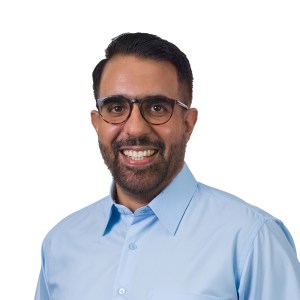
Mr Pritam Singh (Aljunied): Community Improvement Projects Committee (CIPC) funding is an important source of Government grants for improving HDB estates. CIPC projects cover basic infrastructure, recreational facilities and communal amenities, including playgrounds, fitness areas and linkways. For example, on multiple occasions in this House, I have asked about the quantum of CIPC funds given to each Town Council, so there is a clear quantifiable data point to indicate how much taxpayer money has been given to each Town Council. In 2017, the then Minister for National Development said that MND did not prescribe any standardised way for Town Councils to present the CIPC quantum.
When I asked the same substantive question last year, the Minister replied that the amount of CIPC funding disbursed to each Town Council each year is based on the works completed by the Town Council as the implementing agent. The disbursement is reported in the respective Town Council’s annual financial statements. The annual disbursement to the Town Councils includes CIPC projects approved over multiple years, as projects may take years and exclude CIPC projects implemented by the Citizens’ Consultative Committees (CCCs).
Even though the disbursement is reported in the annual financial statements of all Town Councils, without a standardised way of presenting the information, tracking the absolute amount of CIPC funding channelled to each Town Council can be challenging and inaccurate, particularly if one compares the amounts disbursed by MND to PAP and opposition Town Councils.
Prior to 2021, opposition Town Councils had to seek the agreement of the various Citizens’ Consultative Committees under the charge of unelected People’s Association (PA) advisors, including losing PAP candidates. In 2021, MND correctly changed the process for making CIPC nominations and Town Councils, in addition to CCCs, were allowed to propose projects for funding. Opposition Town Councils need not get the buy-in and support from CCCs that work exclusively with PA grassroots advisors anymore.
In view of the change of approach since 2021, may I ask the Minister to answer these questions relating to all new CIPC proposals from 2021 to date? Could the Minister please name the top five Town Councils in terms of CIPC funds granted and the quantum extended to each Town Council respectively?
Please also name the bottom five Town Councils and the quantum of CIPC funds granted to each respectively over the same period. Please include projects regardless of whether they came from the Town Councils directly or through the CCCs. How does the Committee decide which project proposals are approved and which are rejected by the CIPC committee?
And finally, in this regard, would MND meet with elected opposition Town Councillors to discuss projects which it rejects?
The Senior Minister of State for National Development (Ms Sim Ann): To the query by the Leader of the Opposition, the funds granted to each town by the Community Improvement Projects Committee (CIPC), depends on three factors. First, the number of HDB flats in the town. Larger towns with more residents will be allocated more resources. Second, the number and value of projects submitted. The CIPC will evaluate projects in the rank order submitted by the Town Councils (TCs) and Citizens’ Consultative Committees (CCCs). Third, whether the submitted projects meet eligibility criteria. For example, projects that are not value for money, or cater only to specific interest groups or commercial entities will be rejected.
Broadly speaking, larger towns that submit more projects amounting to higher values get more funding. Most projects are approved. Where they are rejected, there are two reasons. [Please refer to the clarification later in the debate.]
One, they did not meet the eligibility criteria; or two, they were lower-ranked projects from towns which submitted a total project value far exceeding what would have been commensurate with the number of flats in their town. For such projects, TCs and CCCs can resubmit them in subsequent years with higher rank orders.
So far, we have completed three funding cycles for FY2021, FY2022 and FY2023. For FY2024, we have completed the first stage of in-principle approval. From experience, the final funding for FY2024 may be slightly lower if TCs and CCCs eventually decide, for their own reasons, not to proceed with some of the supported projects.
Based on the funding approved to date, between FY2021 and FY 2024, the top five towns are Ang Mo Kio, Pasir Ris-Punggol, Jurong-Clementi, West Coast and Sembawang, with funding ranging from $14.2 million to $21.1 million. These are larger towns ranging from 69,000 to 104,000 HDB flats.
The bottom five towns are Aljunied-Hougang, Marsiling-Yew Tee, East Coast, Holland-Bukit Panjang and Bishan-Toa Payoh with approved funding ranging from $11.0 million to $4.9 million. Most of these are smaller towns, ranging from 39,000 to 53,000 HDB flats. The exception is Aljunied-Hougang, which has 62,000 HDB flats – a mid-sized town with the lowest funding approved across towns.
I looked into why Aljunied-Hougang has been receiving less CIPC funding than other towns. The reason is that it has consistently submitted fewer projects than the rest. For example in FY2024, each town on average submitted 53 projects. On average, the CIPC approved about 39 projects at about $4 million per town. Aljunied/Hougang submitted the fewest projects: 18 projects for a total of $1.2 million, and CIPC gave in-principle approval to all 18 projects.
Sengkang submitted the most projects, 248 projects worth $30 million or about half of the more than $60 million funding approved across all towns. Given funding constraints, the CIPC could only support 47 of Sengkang’s higher-ranked projects amounting to $4.5 million.
The CIPC is happy to clarify with any TC or CCC if they have queries on their rejected proposals. In fact, the CIPC has regularly provided explanations to TCs and CCCs that requested such information and will continue to do so.
The Chairman: Before I go to clarifications, Senior Minister of State Sim Ann, you have a clarification to make?
Ms Sim Ann: Mr Chairman, please allow me to make a clarification. There was a missing word from my speech earlier, in the section where I dealt with CIPC applications. I should have said: “Most projects are approved. Where they are rejected, there are generally two reasons”. And the reasons are as what I have stated in the speech.
Mr Pritam Singh (Aljunied): Finally, to Senior Minister of State Sim Ann, thank you for that extensive reply on CIPC. I think it is well appreciated. With Aljunied Hougang Town Council having received little to no CIPC funding from 2011 to 2021, one can understand why this source of funding is important for Town Councils. I appreciate the funding that has been extended after 2021 and I note Senior Minister of State’s reply in terms of how MND will look at some of the projects that have been put up. For Aljunied Hougang Town Council, we will put up projects subsequently with a focus on recreational upgrades and upgrades for seniors in our town, because it is a more mature town. So, just to record my appreciation for that reply.
Ministry of National Development
4 March 2025
https://sprs.parl.gov.sg/search/#/sprs3topic?reportid=budget-2597
5 March 2025
https://sprs.parl.gov.sg/search/#/sprs3topic?reportid=budget-2603
 Office of the Leader of the Opposition