
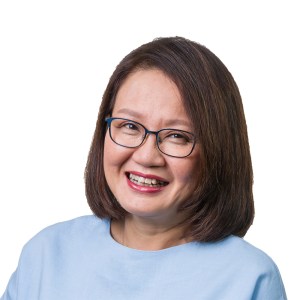
Ms Sylvia Lim (Aljunied): Chairman, my cut today is focused on consumer protection for online scams. As to why I am filing this card for MTI instead of other more obviously connected Ministries, this is because I believe that the Competition and Consumer Commission of Singapore can play a major role in this area.
At the outset, I wish to acknowledge the work of the different agencies, some around the clock, to prevent, detect, disrupt and respond to online scams. Some of my own residents were saved from losses due to interventions during ongoing transactions.
However, as consumers continue to lose a record amount of money to scams across a wider range of sectors and to increasingly sophisticated criminals, an overarching body to set and enforce standards and protections for consumers will be desirable over the current sector-specific and somewhat fragmented approach. For example, the Shared Responsibility Framework falls under the purview of the Monetary Authority of Singapore (MAS).
However, as an integrated financial regulator with a focus on prudential oversight and supervision of the financial services sector, it would be difficult to expect the MAS to also protect and enforce consumer rights. Consumer complaints are often directed to channels, such as the Financial Industry Disputes Resolution Centre (FIDRec) or the Consumers Association of Singapore (CASE), but both have limitations, including in enforcement. Further, the current approach also means that solutions like the Shared Responsibility Framework, which is currently limited to phishing scams, only apply to banks and telcos.
With investment scams and job scams making up 29% and 14% of all scam losses in 2024, the Government will constantly have to play catch up with evolving scam methodologies across various sectors. Consumers need a stronger advocate in their fight against scams.
Accordingly, I believe that the Competition and Consumer Commission (CCCS) is best placed to take on such a central role with a focus on consumer rights. CCCS is a statutory board and has the power and legal authority to set and enforce national consumer protection standards. Critically, it will be able to protect consumer rights across a range of sectors and be a single point of contact for scam victims seeking redress.
This has recently been done in Australia with the passage of the Scams Prevention Framework Bill 2025. The Bill established the framework within the Competition and Consumer Act 2010, and under the supervision of the Australian Competition and Consumer Commission. As noted by the Minister at the Second Reading of that Bill, the legislation operates across a whole range of sectors, including social media platforms, and allows consumers to look at a trusted, centralised point within Government.
Sir, consumers bear the brunt of online scams and should be at the centre of prevention, detection, recovery and enforcement strategies. Our approach would be strengthened by having a centralised consumer protection agency, like CCCS, set and enforce such standards across a range of sectors.
The Senior Minister of State for Trade and Industry (Ms Low Yen Ling): I also want to assure Ms Sylvia Lim that there is a whole-of-Government approach today to deal with scams which are criminal in nature, led by MHA and coordinated by the Inter-Ministerial Committee on Scams.
MTI and the Competition and Consumer Commission of Singapore (CCCS) regularly review our consumer protection regime to ensure that consumers’ interests are protected. The Consumer Protection (Fair Trading) Act (or CPFTA) provides general remedies for consumers who encounter unfair trade practices when transacting with businesses. In addition, sector regulators have established more specific standards relevant to the sectors they oversee.
An effective consumer protection regime also requires the strong support of our key partners and businesses. MTI works closely with the Consumers Association of Singapore (CASE) to raise consumer awareness and champion their needs and rights. I agree with Mr Melvin Yong that more can be done, especially in the e-commerce space, where unfair practices can take on new and less-obvious forms.
The Government welcomes and encourages businesses to take the lead in industry-led initiatives, to ensure a fair and safe marketplace for our consumers. We have commenced consulting with the industry and will announce more details on our upcoming initiatives in the coming weeks.
The Chairman: Ms Sylvia Lim.
Ms Sylvia Lim (Aljunied): Chairman, I have two clarifications for Senior Minister of State Low Yen Ling on my cut on scams, which she touched on briefly.
First, she mentioned the whole-of-Government efforts through the Inter-Ministerial Committee on Scams (IMCS). I read that MTI is also represented on that committee. So, I would like to understand a little bit more on what is MTI’s interest and contribution so far to the work of the IMCS. That is the first question.
The second question is: of course, underlying my cut is the issue of consumer protection because as far as scams are concerned, we often find that the consumer is actually dealing with service providers like banks, telecommunications companies (telcos) and social media companies, and there is some unequal bargaining power there.
So, I would like to understand whether the CCCS is actually looking into this area. Is it doing anything in the field of online scams to protect consumers or to do some standard setting?
Ms Low Yen Ling: Chairman, I want to thank Ms Sylvia Lim for her two clarifications.
I will address the second one first. I understand where the Member is coming from when she shared her thinking when she delivered her cut yesterday. As shared by Minister of State Sun Xueling during the Ministry of Home Affair’s (MHA’s) COS debate, a majority of the scams involve self-effected transfers of money to scammers as well as cryptocurrency scams.
These are, one, criminal in nature and two, often carried out by highly sophisticated criminal networks. The third point really is that a lot of these are really based out of Singapore. So, such scams are, hence, more appropriately handled by our law enforcement authorities.
But I want to assure her that to ensure a collective effort in tackling scams, the Singapore Government works closely not just mounting a whole-of-Government approach, but also with the private sector. Members have heard from Minister of State Sun Xueling, with the various tech companies and so on, as well as community partners, to tackle scams, go upstream, not just engaging the seniors, but it can affect people of all ages and all backgrounds.
So, the anti-scam efforts are coordinated by the Inter-Ministerial Committee on Scams, which comprises representatives from MHA, Singapore Police Force, MDDI, IMDA, MAS and other public agencies. MTI sits in, and if there are relevant cases that are relevant to our economic agency, that is where we will bridge the communications.
Notwithstanding that, I want to assure the Member that where there are unfair practices by, say, suppliers being involved, CCCS can certainly take them to task under our CPFTA. This really forms part of the whole-of-Government approach, where agencies can work together to safeguard consumer interest.
Ministry of Trade and Industry
6 March 2025
https://sprs.parl.gov.sg/search/#/sprs3topic?reportid=budget-2610
 Office of the Leader of the Opposition