
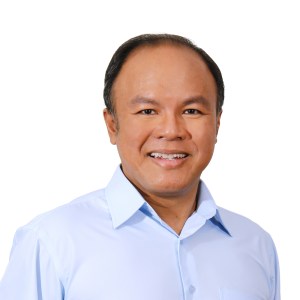
Mr Muhamad Faisal Bin Abdul Manap (Aljunied): Madam, I would like to address the issue of the workload of junior doctors. MOH has mentioned on 10 January 2024 in Parliament, that their guideline for junior doctors stipulates that, when average out over a month, the total work hours per week of junior doctors should not exceed 80 hours. Thus, over an average month of four weeks, the total work hours should not exceed 320 hours.
Anecdotally, I hear that many junior doctors, particularly in our acute hospitals, regularly hitting or coming close to this limit.
A nationwide survey published in the Journal of the Academy of Medicine Singapore, in 2023, reports that junior doctors work an average of 71 hours a week, which adds up to 284 hours on an average month.
3.30 pm
In contrast, the Ministry of Manpower’s (MOM’s) employment guidelines stipulates that the contractual hours of work for common work arrangement under part four of the Employment Act is 44 hours a week and a typical employee is only allowed to work up to 72 overtime hours a month. For an average month, MOM’s guidelines suggest that a typical work month would see one work 176 hours and even if one works overtime, one should not exceed 248 hours. Any more would presumably not be healthy for the employee.
This suggests that MOH allows junior doctors to work 72 hours more than what is usually deemed healthy for a typical employee. Why have we institutionalised the practice of overworking our junior doctors?
The Employment Act does not mention that managers, executives, solicitors and such are also excluded from this guideline, and doctors, being highly qualified and with special knowledge, belong in this category. To this I say, doctors hold the lives of the vulnerable and ill in their hands. Some indeed may be capable of operating at such an intense level for prolonged periods of time, but I believe many are not.
Do we want our doctors that have been consistently overworked to attend to our sick parents and children in their hours of need? Do we want doctors that are stressed to make decision that can literally involve life and death? The same survey mentioned earlier found a significant correlation between the number of medical errors made with the amount of additional clinical hours worked per week.
I note that in many parents’ guides that MOH publishes, they emphasise the importance of parents being heavily involved in their children’s life for children’s health development. Many junior doctors in the public healthcare system are bonded and do not have the option of quitting if they are unable to deal with the stress and workload. They have no recourse and are forced to make choices that compromise their family time. Is it not ironic that even MOH, as MOH puts out these guidelines, their own doctors are unable to follow them due to the amount of hours they need to put into work?
Madam, the current system to me does not seem sustainable. As the workload of junior doctors increases, many choose to leave the public healthcare system for better pay and lesser working hours. This only serves to aggravate the workload of the remaining doctors, leading to a self-reinforcing cycle. To me, MOH must intervene fast and decisively to change the system.
Madam, Minister Ong mentioned in May 2024 that the National Wellness Committee on Junior Doctors has finalised its recommendation and are now progressively implementing them. Are the details of this recommendation and findings going to be made public? Is MOH looking into more aggressively hiring junior doctors, especially those that have left the public healthcare system? How do they intend to do so? Will it include increasing doctor’s salaries to better compete with the private sectors and, if so, how much?
Madam, I would close by saying, just because generations of doctors have survived such conditions is no excuse for MOH to continue to perpetuate such attitudes and working conditions. Should we not strive to be a society that is kinder and more compassionate, especially to those that care for us?
The Minister for Health (Mr Ong Ye Kung): Mr Faisal Manap spoke up about the difficulties that junior doctors are facing. I thank him for caring for our doctors. But let me state a few facts.
One, the Employment Act does not cover professionals, managers and executives (PMEs), including doctors. The hours that you mentioned do not apply. I think many PMEs, including Members in this House, we work quite a number of hours, beyond what is specified in the Employment Act.
Number two, I hope Members do not go away thinking that we are facing a major outflow of doctors. Our attrition, post-COVID-19, is about 7%. It is healthy. I wish it can be slightly lower, but actually, it is quite healthy. [Please refer to the clarification later in the debate.]
Thirdly, salary adjustments for doctors were implemented 1 February 2024 only recently and we try to make sure we are competitive.
I want to emphasise: MOH has cared for our people and invested in them heavily for decades. From the moment they enter medical school, the subsidy we provide, the investment we made in our talent when they come into the system, going through housemanship, as a junior doctor, going through residency. We invested heavily and we continue to invest heavily in our doctors.
But in championing the welfare of junior doctors, I urge Mr Faisal, too, to consider the interest of patients.
Remember, healthcare is not like aviation. When pilots need to rest, passengers just have to wait for the next flight. All of us have experienced that in airports before. If we do that for doctors, patients will be left untreated and their lives can be in danger.
So, for MOH, we constantly have to balance the welfare of healthcare workers as well as patients. If we suddenly limit the working hours of doctors, patients will suffer. There have been many efforts for us to better manage these tensions, which the Senior Minister of State Dr Janil Puthucheary will elaborate on.
Ministry of Health
7 March 2025
https://sprs.parl.gov.sg/search/#/sprs3topic?reportid=budget-2621
 Office of the Leader of the Opposition