
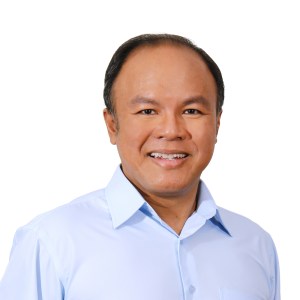
Mr Muhamad Faisal Bin Abdul Manap (Aljunied): Chairman, in Malay.
(In Malay): Sir, I would like to seek clarification and elaboration on four matters concerning the Malay/Muslim community in Singapore. These matters are: (i) the construction and management of mosques; (ii) Warees Halal Limited; (iii) the Asatizah Recognition Scheme (ARS); and (iv) full-time madrasahs.
Sir, the Muslim community, especially those living in Tampines North and western Pasir Ris areas, like myself, warmly welcome the recent announcement on the resumption of plans and efforts to build a mosque in the Tampines North HDB estate. I would like to seek clarification on why the decision to build this mosque was delayed for nine years even though the announcement was first made in 2015, five years before the COVID-19 pandemic happened.
Secondly, with the increasing number of HDB blocks under the BTO scheme in existing estates as well as the development of new HDB estates, I would like to ask the Minister, what are the factors considered by MUIS in its decision to add a second mosque in existing HDB housing estates like Tampines, and the construction of mosques in new HDB housing estates, such as Tengah and upcoming HDB estates like Bayshore.
Sir, I will next touch on the administration of mosques. My first question: how many mosques are currently under the management of Executive Chairmen (MEC) and how many are under the management of non-Executive Chairmen?
During the 2012 Committee of Supply debates, in replying to my query, the Minister-in-charge of Muslim Affairs at that time said that MUIS bears or pays 20% of the Executive Chairman’s monthly salary and the remainder is paid by the mosque. My question is, has this percentage remained constant or has it changed? And if possible, can the Minister share what is the monthly income of the Mosque Executive Chairman (MEC)?
Sir, the second matter pertains to Warees Halal Limited. The website of Warees Halal Limited states that it is a not-for-profit company limited by guarantee, as a subsidiary of MUIS Group whose focus is on providing Halal services and not on generating profits. My questions are as follows: (i) what are the annual revenue, expenses and net income of Warees Halal between 2020 to 2024; and (ii) what are Warees Halal’s plans to meet the increasing demand for halal services in the medium term?
Sir, the next matter is regarding the Asatizah Recognition Scheme (ARS). I would like to ask the following: (i) how many asatizah are registered under the ARS to date; (ii) what is the total number based on gender, that is, Ustaz and Ustazah; (iii) what is the number of cases where the accreditation was withdrawn or cancelled since this scheme was established, and if there are any, what are the reasons for the cancellation of accreditation; and (iv) how many asatizah under ARS currently are from the Sunni and Syiah schools of thought?
Sir, the last matter is about full-time madrasahs. Before I continue, I would like to declare that I have a child studying in a full-time madrasah in Singapore. Sir, my question is, what is the annual Primary 1 intake for full-time madrasahs for 2022, 2023 and 2024; and my second question is how many Primary 1 registration applications were received on those years?
The Minister-in-charge of Muslim Affairs (Mr Masagos Zulkifli B M M): Mr Sharael Taha and Mr Faisal Manap asked about mosque development plans. As our Prime Minister recently announced, we will resume developing the mosque in Tampines North and build a new mosque in Tengah in the coming years. The mosque in Tampines North was announced in 2015. At the time, the area was still under development. In 2019, we upgraded Masjid Darul Ghufran with a larger prayer hall to accommodate more congregants. The construction of the mosque in Tampines North was delayed due to COVID-19, which also significantly impacted the implementation of other planned infrastructure projects. When the situation improved, MUIS reviewed the mosque development plans and decided that planning for new mosques could proceed. MUIS works closely with national agencies on the planning of new mosques, which considers demographic changes and population projections with the development of new towns across Singapore.
To Mr Faisal Manap’s query, there are currently 32 mosques under the management of Executive Chairmen while the rest are led by Honorary Chairmen. Our Executive Chairmen receive competitive compensation packages that commensurate with their responsibilities in managing mosque operations and serving the community.
Mr Faisal Manap also asked about Warees Halal Limited (WHL). WHL was set up to provide a complementary role to MUIS’ Halal Certification Unit. Given significant developments in the halal regulatory regime and the halal industry over the years, MUIS will continue to review the role of WHL in response to these changes.
Back to Mr Faisal Manap’s question on the sharing of costs to pay for the employment of Mosque Executive Chairmen, the cost-sharing arrangement between MUIS and the mosques is reviewed based on the mosques’ financial capabilities.
Even as we ensure we have enough funds to build new mosques and to establish the SCIS, we must also ensure that our community’s funds are sustainable. Hence, the Wakaf Masyarakat Singapura (WMS), which was launched last year to support the long-term religious needs of the Malay/Muslim community, is crucial. WMS will create a long-term, sustainable funding stream for our community and empower the Malay/Muslim community to chart a brighter future.
[…]
Chairman, our asatizah contribute beyond their traditional role of religious instruction. They also support the community in other ways. To Mr Faisal Manap’s query, there are 5,080 asatizah recognised under the Asatizah Recognition Scheme (ARS), of which around two-thirds are female.
[…]
Our asatizah also play a key role in forging trust and mutual understanding between different faiths and communities. They lead their congregants to continue to actively expand our common spaces and open the mosques to other communities. This is especially felt during this Ramadan, when the mosques welcome non-Muslim friends to join us for “buka puasa”, as we share the joy and blessings of Ramadan together. We must therefore ensure that the religious sector remains attractive to have a steady pipeline of quality asatizah. Their journey usually begins at our madrasahs. To Mr Faisal Manap’s query, for each Primary 1 cohort, our madrasahs can admit up to 400 students. On average, the madrasahs accept one of every two students who apply.
The Chairman: Mr Faisal Manap.
Mr Muhamad Faisal Bin Abdul Manap: Sir, I believe that the Minister did not answer quite a number of my questions. But due to time factors, I will submit a Parliamentary Question. Nonetheless, I have two clarifications.
One, on the full-time madrasahs. If I were to hear the Minister mentioned correctly just now that there are 400 places every year for Primary 1 enrolment and, at this point in time, almost every year, we have a double application for that 400 places. So, can I seek a clarification from the Minister whether does he MUIS to work with the full-time madrasahs to increase the number of Primary 1 places in these full-time madrasahs?
Secondly, regarding the Mosque Executive Chairmen (MEC), I just want to clarify whether is the proportion still the same where 20% of MEC’s salary comes from MUIS and the other 80% comes from the mosque? I just want to clarify that.
Mr Masagos Zulkifli B M M: Before I respond to the questions, I would like to ask Mr Faisal Manap whether he wants us to expand or he is asking me whether we should expand the places in the madrasahs.
The Chairman: Mr Faisal Manap.
Mr Muhamad Faisal Bin Abdul Manap: Just asking whether MUIS can work with the full-time madrasahs to expand the number of intakes.
Mr Masagos Zulkifli B M M: So, the question is whether madrasahs really should expand, because the demand is much higher than the placement?
Mr Muhamad Faisal Bin Abdul Manap: I think the madrasahs should expand. But will MUIS work with the madrasahs to deal with this problem, meaning the shortage of places for Primary 1?
Mr Masagos Zulkifli B M M: Mr Chairman, when we receive or accept the placement into the madrasah, we are not just looking at the point of entry. We have to look at the whole journey the child will take and we are responsible for it. That means that by the time they leave school, they must have a livelihood; and this is the reality of living in Singapore. It is not just pursuing an education to fulfil the dreams of the parents alone, but we must be able to ensure that when they go out, they have a career, a meaningful career and livelihood.
Today, out of the 400 annually that we admit into madrasah, actually only around 150 move on to do Islamic tertiary education beyond our madrasah system. Where did the others go? If we had not designed our madrasah so that if they were to leave the madrasah system or cannot complete the madrasah system, they can go back to the national system, we would have a situation that we had before the year 2000 – many drop-outs who would not be able to get back into the national system.
But because, over the years, we have constrained the numbers or limited the numbers to fit the needs of the community, the number of asatizahs we need in the years to come and we have done the manpower planning for that, 400 is about just nice. At the same time, for those 400, those who cannot continue, they are able to continue their national stream with no problems, which is why we do not have any dropouts in that sense of the word. And for this 150 who move on to become asatizahs, we want to ensure that they are competent, and when they come back, they have a job waiting for them, they have a livelihood that they can rely on. We do not want to end up with our asatizah pursuing a very long journey in becoming a religious scholar, finding no place in our society or mostly freelancing for that matter, while they do other jobs.
So, for now, this 400 is sufficient, it is what we need and, over time, if we need more, we will certainly increase it. But then, again, it is focused on the interest of the community’s needs, as well as to ensure that every child that gets into our madrasah system does not lose out in becoming a contributing citizen in Singapore.
Ministry of Culture, Community and Youth
10 March 2025
https://sprs.parl.gov.sg/search/#/sprs3topic?reportid=budget-2639
 Office of the Leader of the Opposition